


-
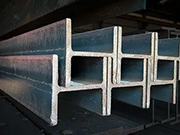
Why Is H Beam Steel Widely Used in Steel Structures
H-beam steel is widely used in structural steel construction because its cross-sectional geometry provides an efficient way to carry bending, shear, and axial loads. The section consists of two flanges connected by a vertical web, forming an H-shaped profile that can be used for both beams and co...Read more -
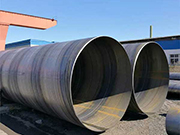
SSAW Steel Pipe Welding: Key Quality Control Points
SSAW steel pipe, also known as spiral submerged arc welded pipe, is manufactured by forming steel strip into a cylindrical shape and joining the spiral seam by submerged arc welding. Because the weld extends continuously along the pipe, controlling the welding process is essential to the quality ...Read more -
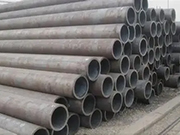
Alloy Steel Pipe in Engineering Projects: Applications and Key Advantages
In an engineering project, pipe material should be selected according to actual service conditions rather than simply choosing the highest-strength material available. Temperature, pressure, fluid chemistry, mechanical loads, fabrication requirements, and expected service life all influence the f...Read more -
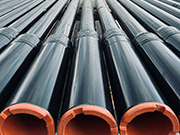
Drill Pipe Manufacturing: 8 Key Quality Control Points
Drill pipe is exposed to repeated torque, axial loads, bending, internal pressure, and make-up and break-out cycles during drilling. A reliable product therefore depends on more than the quality of the steel tube. The pipe body, upset ends, tool joints, weld area, threads, inspection process and ...Read more -
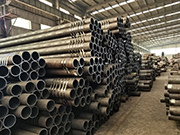
Cold Finished vs. Hot Finished Seamless Steel Pipe: Key Differences
Cold finished and hot finished seamless steel pipes are both manufactured without a welded seam, but their final processing routes give them different characteristics. For buyers, the choice should not be based simply on which process sounds more advanced. The right option depends on dimensional ...Read more -
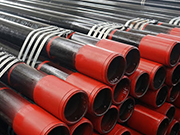
Why Casing and Tubing Are Widely Used in the Energy Industry
Casing and tubing are two of the most important tubular products used in oil and gas wells. They work together, but they perform different jobs. Casing supports and isolates the wellbore, while tubing provides the main flow path for produced fluids. Their combination of mechanical strength, press...Read more -
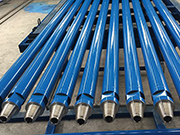
What Are the Key Features and Advantages of Drill Pipe in Oil & Gas Drilling
Drill pipe is one of the working components of a drilling string. It connects the surface drilling system with the bottom-hole assembly, transmitting rotation and axial loads while providing a passage for drilling fluid. Unlike conventional steel pipe used for pipelines or structures, drill pipe ...Read more -
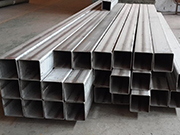
What Are the Advantages of Square Steel Pipe in Engineering Projects
Square steel pipe, commonly specified as a Square Hollow Section (SHS) in structural applications, is used in building frames, industrial structures, equipment supports, platforms, trusses, and other fabricated steelwork. Its value comes largely from its geometry: a closed, symmetrical section pr...Read more -

Stainless Steel Structures Installation: 7 Key Details to Check
Installing stainless steel structures is not simply a matter of lifting members into position and completing the connections. On industrial and infrastructure projects, installation quality can influence structural alignment, connection performance, surface condition, corrosion resistance, and lo...Read more -
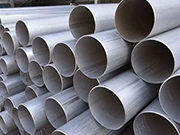
ERW vs EFW Steel Pipe: What Is the Difference and Which Should You Choose
When selecting welded steel pipe for an industrial project, ERW and EFW are two terms buyers often encounter. Although both involve electrically produced heat to create a welded joint, their welding principles and manufacturing routes are different. The right choice should not be based on the ass...Read more -
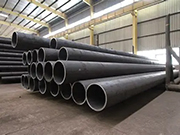
How Is LSAW Steel Pipe Treated for Corrosion Protection
LSAW steel pipe is widely used in oil and gas transmission, water infrastructure, piling, and industrial pipelines where large diameters, substantial wall thicknesses, and long service life are required. However, carbon steel can corrode when exposed to moisture, oxygen, chemicals, seawater, or a...Read more -
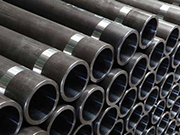
How Is Carbon Steel Pipe Quality Controlled During Production
Carbon steel pipe quality is not determined by a final inspection alone. From raw material selection to forming, heat treatment, testing, marking, and shipment, each production stage can affect the pipe’s performance in service. For industrial projects, a reliable carbon steel pipe quality contro...Read more
China's most trusted manufacturers of Stainless Steel Pipes & Tubes.

- Email Support info@hunantube.com
- Call Support +86-0731-88672086